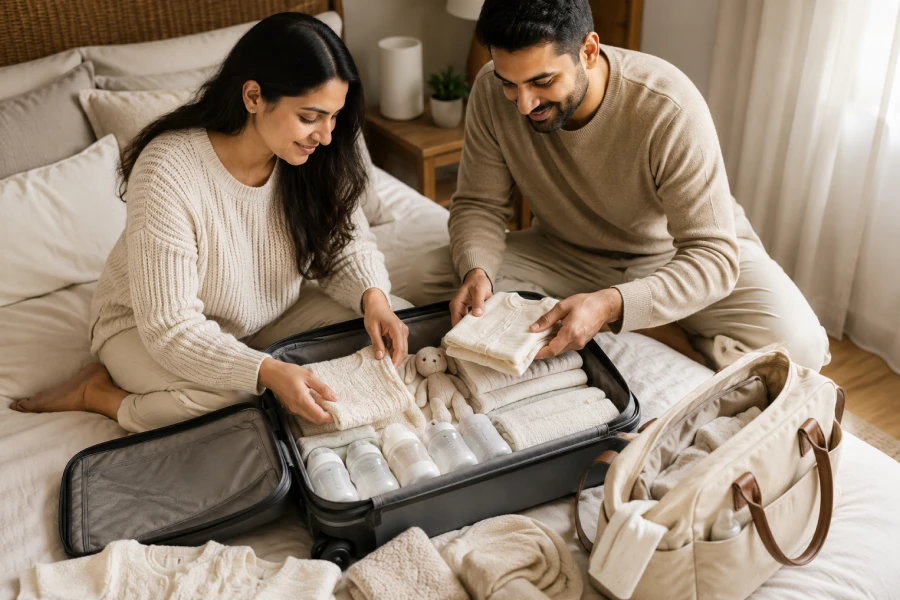
Useful newborn travel packing tips begin with a clear picture of the actual journey. A two-hour drive requires different preparation than a full day of airports and connections. Parents often overpack because uncertainty makes every item feel equally urgent. A better method connects each packed object to feeding, diapering, sleep, safety, or recovery. This simple filter reduces bulk without removing essentials. It also makes the bag easier to navigate while holding a baby. Thoughtful packing for newborn travel focuses on access, backups, and realistic delays. Parents should protect their own basic needs inside the same plan. A hungry, dehydrated caregiver has less patience for ordinary travel complications. Good packing creates confidence because the next useful item remains easy to find.
Start by mapping every travel segment from departure to settled arrival. Include waiting periods, transfers, security lines, and ground transportation. Estimate supplies for the expected duration, then add a sensible delay buffer. Weather, laundry access, and nearby stores should influence quantity decisions. Ask whether a bulky item can be rented or purchased at the destination. Confirm what your accommodation already provides before packing duplicates. Create one master list, then divide it between carry-on and checked luggage. Keep anything medically important or difficult to replace beside you. This journey-first method prevents random additions during the final stressful hour. Every item earns its space by solving a specific likely need.
A bag system works when categories remain visible and easy to reach. Use separate pouches for diaper changes, feeding, clothing, sleep, and parent supplies. Labeling can help, but distinct shapes or textures work in low light. Place the diaper pouch near the opening because it will be used repeatedly. Keep one complete outfit change together instead of scattering pieces throughout the bag. Store wet items inside a dedicated washable or sealed container. An organized setup improves airport tips for parents by reducing frantic searching. Refill each pouch after use so the system remains dependable. Test the packed bag while carrying the baby or wearing a carrier. Comfort and one-handed access matter more than a perfectly styled interior.
Feeding supplies should match your baby’s usual routine and realistic backup needs. Nursing parents may want pads, a cover if preferred, and an extra shirt. Bottle-feeding families should plan safe preparation, cleaning, storage, and temperature management. Bring more burp cloths than your first instinct suggests. Pack familiar pacifiers or comfort tools in separate easy-to-reach places. Keep snacks and water available for caregivers, especially during long connections. Discuss current travel rules before carrying liquids or specialized equipment. Preparation for feeding baby while traveling should reduce steps during stressful moments. A simple backup can prevent one delayed feeding from becoming an exhausting crisis. Familiar methods usually work better than introducing new products during departure.
Newborn clothing should prioritize layers, soft fabrics, and uncomplicated changes. Cabins, cars, terminals, and hotel rooms can vary dramatically in temperature. Pack complete outfits together so adults do not hunt for matching pieces. Include extra socks, sleepwear, bibs, and one warmer layer than expected. Avoid outfits with difficult fasteners during a crowded diaper change. Caregivers also need a fresh shirt and practical clothing for feeding access. Use packing cubes to separate clean clothing from used items. A familiar sleep layer can support newborn sleep on vacation without adding bulky gear. Review the destination forecast shortly before leaving. Clothing choices should help the baby stay comfortable without creating unnecessary luggage.
Safety items deserve priority because they are harder to improvise responsibly. Bring prescribed medicines, dosing tools, health information, and emergency contact details. Confirm that your car seat suits the travel plan and destination transportation. Use protective storage without adding accessories that interfere with safe installation. Keep sun protection, weather layers, and hygiene supplies appropriate for your newborn’s age. Parents should follow professional advice for sleep spaces and travel health precautions. A small first-aid kit can support minor caregiver needs as well. Documents should remain dry, secure, and accessible during check-in. Safety planning should feel calm and specific rather than driven by frightening possibilities. The right essentials create readiness without turning the suitcase into an emergency warehouse.
Many attractive baby products can stay home without harming the travel experience. Duplicate toys, decorative outfits, and full-size containers often add weight without meaningful value. Choose one or two familiar comfort objects instead of an entire nursery collection. Leave items that cannot survive spills, rough handling, or frequent repacking. Consider whether the destination offers reliable delivery or nearby stores. Parents sometimes pack for every possible inconvenience while forgetting their own rest. Simpler luggage improves mobility through stairs, narrow aisles, and crowded transportation. A lighter setup also leaves room for supplies acquired during the trip. Packing less does not mean caring less. It means protecting attention for the baby, the journey, and the people traveling together.



Leave a comment